SponsoredPaid content from Oatmoor — a guide we wrote for dog owners who read the back of the bag.

The question

What should I actually check on a dog food label?

A reader wrote in last week and asked exactly that. It is a good question, and the honest answer is that most of the panel is written for the buyer, not for the dog — so it is worth knowing which five lines carry the weight and which ones are just noise.
By the Oatmoor kitchen team9 October 20268 min read
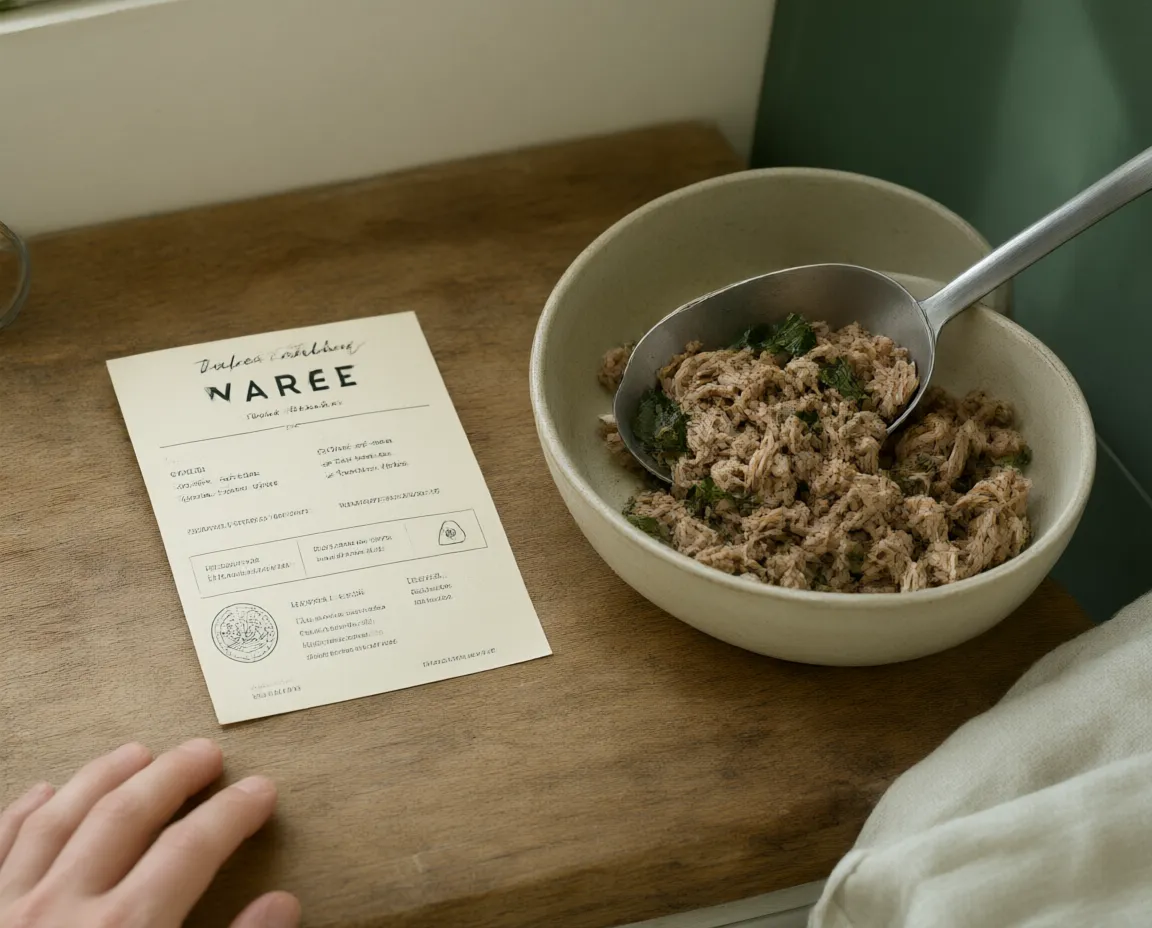
A printed dog food label lying on a wooden counter beside a bowl of lightly cooked food

Take any bag or tray off a shelf and turn it over. You get a wall of small print: an ingredient list, a guaranteed analysis, a feeding guide, a life-stage statement, a batch code. Some of it is regulated, some of it is marketing, and the two are printed in the same font on purpose. Below are the five things worth your thirty seconds — in the order your eye should travel, not the order they appear on the pack. You can use every one of them in any shop, for any brand, including ours.
01 — named protein

Start with what the protein is called

The first ingredient line is where the most useful information and the most slippage both live. Chicken, beef, salmon, lamb — a named animal, on its own, means the muscle meat of that animal. That is the phrase to look for.

The phrases to slow down on are the collective ones: meat and animal derivatives, meat meal, poultry, animal fat. None of these is a legal red flag — they are allowed, and some perfectly decent food uses them. But they do not tell you which animal, or which part of it, so you cannot follow a protein if your dog happens to react to one. Named beats collective, every time.

One more word to know: meal. A named meat meal (chicken meal) is meat that has been dried and ground. It sounds worse than it is — drying removes water, so a meal often delivers more protein per gram than the fresh meat listed above it. It is not the villain; anonymity is.

Reads clearly

  • checkChicken (60%)
  • checkSalmon, sweet potato, kale
  • checkChicken meal

Tells you less

  • helpMeat and animal derivatives
  • helpPoultry (min. 4%)
  • helpAnimal fat

In the shop: pick the pack whose first line names a specific animal. If nothing on the front or the back does, put it down — there are too many that do.

02 — the order of the list

Ingredients run heaviest first

Ingredients are listed by weight, before cooking. That single rule is the most useful thing you can carry into a shop, because it tells you which number on the panel actually matters: position one.

It also has a known trick in it. Fresh meat is roughly 70% water, and water is heavy, so fresh chicken sails to the top of a list even when the recipe is mostly grain. Two ingredients can be slipped in under slightly different names — ground corn and corn gluten meal — to split a large amount into two smaller, lower positions. Neither is against the rules. Both are why the list is worth reading rather than skimming.

A list, weighted

#Ingredient as printedShare
1Chicken (fresh)largest
2Oatsnext
3Sweet potato
4Kale
5Salmon oilsmallest

Positions are real; the bar lengths here are illustrative, because packs are not required to print percentages.

In the shop: read the first three lines only. If the animal you want is at four or five, you are paying mostly for the other four or five.

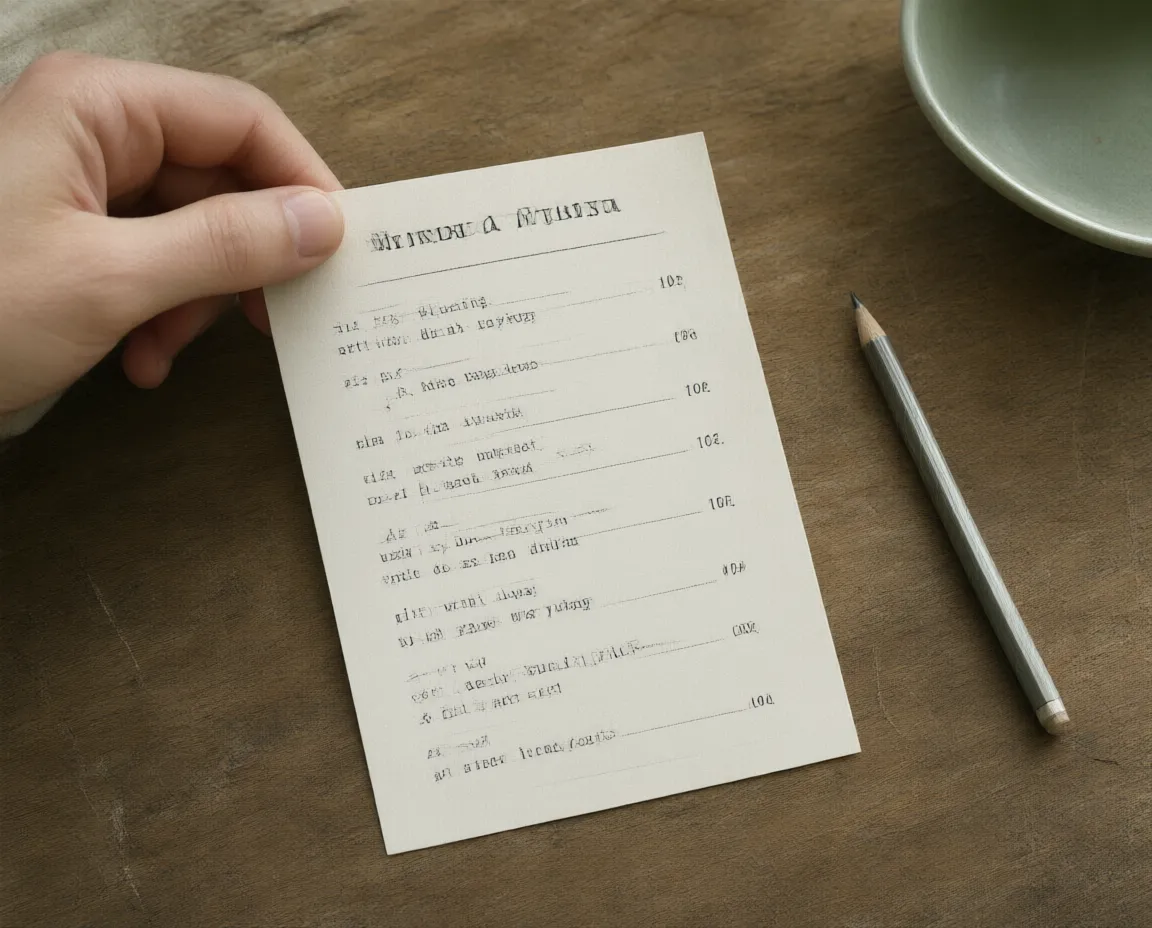
A paper ingredient label held flat on a wooden table

03 — complete & balanced

The phrase that means the food is a meal

Look for a sentence on the pack — usually near the guaranteed analysis, often in small print — saying the food is complete and balanced for a stated life stage, and made to a named nutritional profile.

Complete means it contains every nutrient a dog needs, in the right proportions, so it can be the whole diet. Complementary, or for intermittent feeding, means the opposite: it is designed to sit alongside something else and should not be the only thing in the bowl. Mixers, toppers, bone broths and most treats fall in the second group.

Then check the life stage. Adult maintenance and all life stages are not the same claim, and a puppy fed an adult-maintenance food is eating a diet built for a different set of needs.

If the words are not on the pack, that is your answer: it is not a complete food, whatever the front says.

04 — the feeding guide

A guide is a starting point, not a dose

The feeding table is the part of the panel people follow most literally, and it is the part written most loosely. It is a range, built for an average dog of that weight, and it assumes a fairly ordinary day. Your dog is not average and their Tuesday is not ordinary.

What actually moves the number: how old they are, how much they move, whether they are entire or neutered, whether it is a cold week, and how much of the day is topped up with treats and scraps. A guide is a place to start and to adjust from — by feel, on the ribs and waist, over a couple of weeks.

How to use the table

Dog weightPer daySplit
5 kg100 g2 × 50 g
10 kg170 g2 × 85 g
20 kg290 g2 × 145 g
30 kg390 g2 × 195 g

Figures shown as an example of how a table is structured — always use the numbers printed on the food you actually bought.

weigh it, don't scoop itcut treats from the day's total

05 — storage & portions

Where it lives, and how it is split

Storage is on the label for a reason, and it is usually the shortest instruction on the pack. Dry food keeps its texture in an airtight bin, cool and dark; keep the bag inside the bin rather than tipping the kibble out, since the bag carries the batch date. Once opened, most trays and tubs want the fridge and want eating within a couple of days.

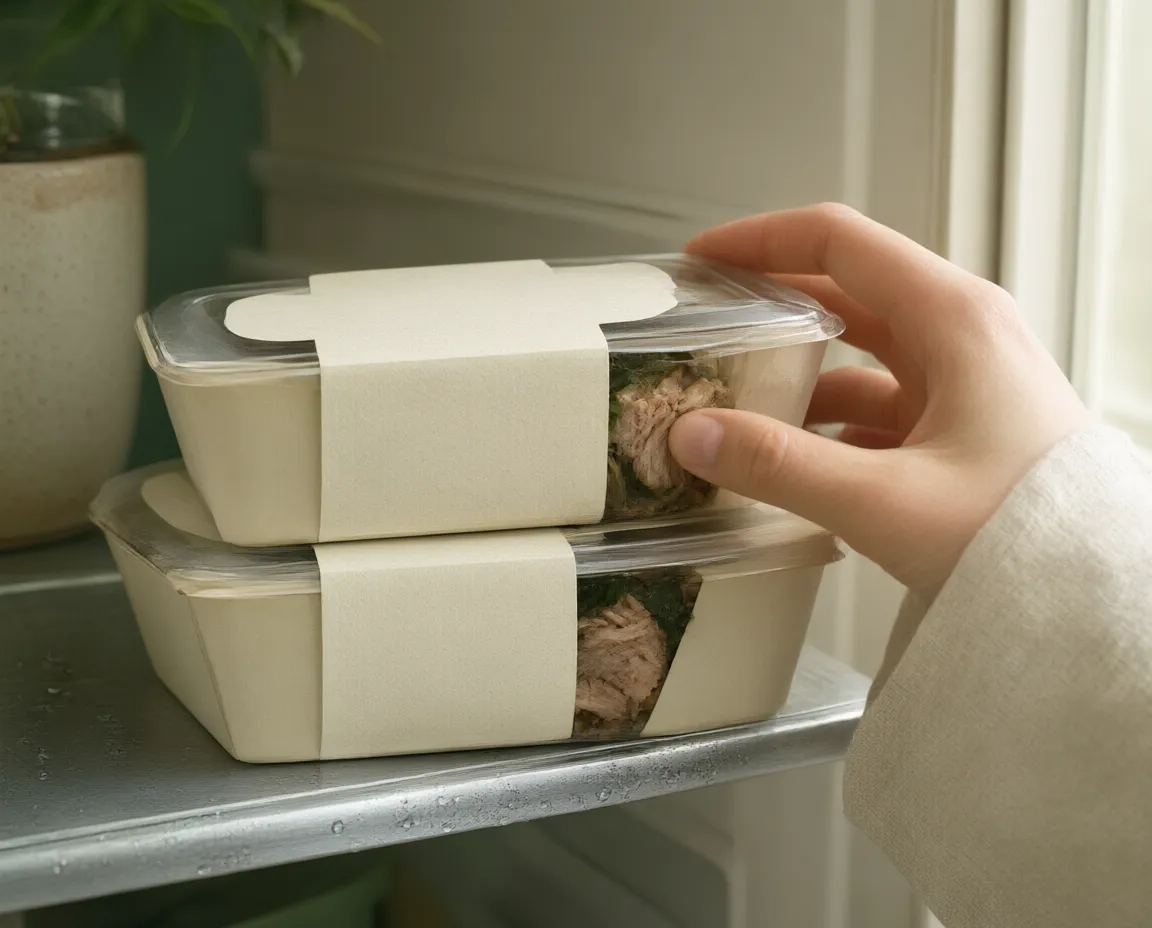
Then look at how the food is divided before it reaches you. A 10 kg bag is one long, slow exposure to air; a tray that is opened, half-used, re-covered and reopened is a different thing again, because every opening is air and a fresh chance for the surface to dry out. Packs sized to a single day, or to a single meal, solve that with packaging rather than with instructions — nothing is left open.

Portioning is the quiet half of the same idea. If the pack is split for you, the daily number on the feeding guide turns into a pack you take out and a pack you leave alone, and the guesswork moves off your kitchen counter.

Checked

Batch date

Printed on the pack, not on the bin.

Checked

Keep cool, dark, sealed

Follow the pack's own wording.

Checked

Pack size vs. day size

Aim for opened-and-finished.

Five lines, thirty seconds, any shop. Named proteins, order of the list, complete and balanced, the feeding guide, and where the food lives once you get it home.

Now, one option

Oatmoor, read against the same five checks

Everything above works in any shop and for any brand. This is the part where we tell you what we make, so you can hold it up against what you just read.

Oatmoor cooks fresh recipes lightly and sends them in pre-portioned packs. Every recipe prints each ingredient by name, in the order it goes into the pot — no collective terms, no animal derivatives, nothing hiding behind a category word. If a recipe contains kale, the label says kale, and says how much of it.

We are not making a health claim here and we are not going to. What we can say plainly is that the panel is written so you can read it line by line, and that the packing is designed so a pack is opened once.

Pre-portioned Oatmoor packs stacked on a fridge shelf

The panel, briefly

  • 01 — protein

    Named on the line, named every time

  • 02 — order

    Printed by weight, as cooked into the pot

  • 03 — the claim

    Complete and balanced, life stage stated

  • 04 & 05 — day and fridge

    Portioned per day, packed per meal

The offer, plainly

Start a first box at 50% off.

You pick the recipes and the box size, tell us your dog's weight, and the first box arrives portioned accordingly. Adjust or stop whenever you like — the packs are labelled per day, so changing course is not a big decision.

  • Format
    Fresh, lightly cooked, pre-portioned packs
  • Labelling
    Every ingredient listed by name
  • First box
    50% off, portioned to your dog
  • If you would rather read the recipes before deciding, they are all listed the same way — ingredient by ingredient, in order.

    See the recipes